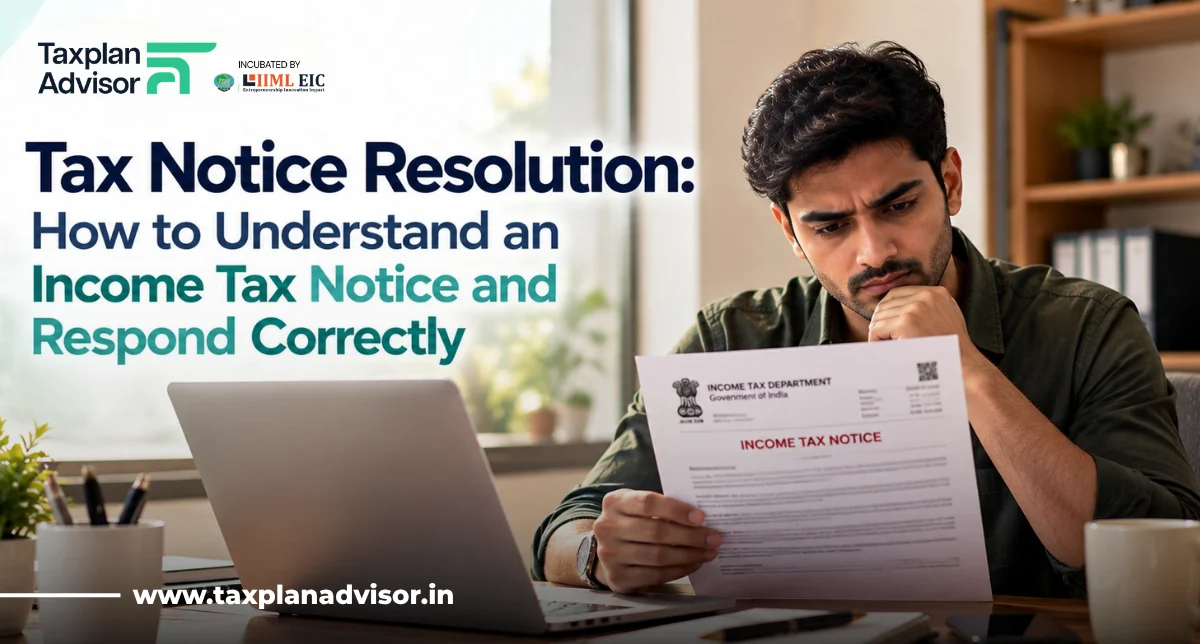
Receiving an income tax notice can be stressful, especially when the message contains unfamiliar tax terms, a short deadline, or a demand to submit documents. However, a notice does not automatically mean that you have committed an offence or that a large tax penalty is certain. It is a communication from the Income Tax Department that needs to be understood and handled according to its purpose.
Tax notice resolution starts with checking whether the notice is genuine, identifying the relevant assessment year and section, understanding what information the department is asking for, and preparing a response supported by records. A clear, timely reply can help explain a mismatch, submit missing information, or correct an error. Ignoring the notice or sending a rushed reply without checking the facts can create avoidable complications.
If you have received an income tax notice and are unsure what to do next, this guide explains the practical steps to take, the documents to gather, common mistakes to avoid, and when professional assistance may be useful.
What Is Tax Notice Resolution?
Tax notice resolution is the process of reviewing a tax notice, understanding the issue raised by the department, collecting supporting evidence, and submitting an appropriate response through the prescribed channel. Depending on the case, it may involve clarifying reported income, reconciling tax deducted at source (TDS), responding to a defective return communication, explaining a deduction or exemption, or addressing a request for additional information.
The correct response depends on the exact notice. A request for information is different from a proposed adjustment, a demand notice, or a communication about a return-processing discrepancy. The notice reference, applicable provision, assessment year, response deadline, and instructions should therefore be read carefully before any action is taken.
An income tax notice reply should address the specific point raised. A generic explanation that does not answer the department’s question may not resolve the issue. Equally, sending unrelated documents can make the response harder to review. The objective is to provide a concise explanation, relevant evidence, and any correction required by the facts and applicable procedure.
First Steps After Receiving an Income Tax Notice
Start by accessing the notice through the official Income Tax e-Filing portal or another official channel identified in the communication. Do not rely only on a forwarded message or an unfamiliar link. Check the notice reference number, date, assessment year, taxpayer PAN, issuing authority, and the response deadline. If anything appears inconsistent, verify it through the official portal before sharing documents or making payments.
Next, read the notice from beginning to end. Identify the issue in plain language: Is the department asking for a document, pointing out a mismatch, proposing an adjustment, or communicating a demand? Note every question and each item requested. If the notice refers to an earlier filing or response, retrieve that record too.
Finally, create a simple response checklist. List the requested documents, the person responsible for finding each document, and the date by which the reply must be submitted. If the deadline is close or the issue involves a substantial amount, seek qualified tax assistance promptly rather than waiting until the last day.
Common Reasons Why Taxpayers Receive Notices
Notices can arise for several reasons, and the reason stated in the notice should guide the response.
Income or information mismatch: Salary, interest, securities transactions, rent, or other income reported in a return may not appear to match information available to the department. Review the relevant statements and records before deciding whether the return contains an error.
TDS or tax-credit differences: Tax deducted by an employer, bank, client, or another deductor may not align with the credit claimed in the return. Compare Form 16, Form 16A where relevant, Form 26AS, the Annual Information Statement (AIS), and the return filed. Differences may need clarification with the deductor or a carefully supported explanation.
Deduction or exemption questions: The department may ask for evidence supporting a deduction, exemption, or claim. Keep receipts, certificates, investment proofs, payment records, and other relevant documents. Claim only what is supported by the applicable rules and your actual circumstances.
Return-processing or filing issues: A notice may relate to a defective return, an apparent omission, a processing adjustment, or a demand. Check the exact communication and prescribed process; do not assume every notice requires the same type of reply.
High-value or third-party information: Information reported by banks, employers, registrars, or other reporting entities may need reconciliation with the taxpayer’s return. Explain the transaction accurately and retain evidence of its nature and tax treatment.
Documents to Collect Before Preparing Your Reply
The documents required depend on the notice, but a well-organised file often makes the review faster. Keep a copy of the notice and any earlier correspondence. Collect the income tax return acknowledgement and computation for the relevant year, along with supporting schedules if available.
For employment income, review Form 16, salary slips, and bank statements where they help establish the facts. For TDS issues, compare Form 26AS, AIS, relevant TDS certificates, and payment records. For business or professional income, gather ledgers, invoices, bank entries, expense evidence, and reconciliations relevant to the question asked. For deductions or exemptions, collect the specific certificates, receipts, investment proofs, or other records that support the claim.
Make sure names, PAN details, assessment year, amounts, and dates are consistent across the documents. If a record is unavailable, do not fabricate a replacement or make an unsupported claim. Identify what is missing and ask the relevant employer, bank, deductor, or institution for a corrected or duplicate record where appropriate. Submit only the documents that are relevant and permitted by the official response process.
How to Prepare a Clear Income Tax Notice Reply
A useful reply follows the structure of the notice. Begin by identifying the notice reference and assessment year, then respond to each point in the same order in which it was raised. Use simple, factual language. Explain what happened, state the position supported by your records, and refer to the relevant attachment or evidence.
If the notice points to a mismatch, prepare a reconciliation rather than merely stating that the information is correct. For example, show the amount appearing in the return, the amount in the supporting statement, the difference, and the reason for it, if established by the records. If an error is confirmed, understand the applicable correction mechanism before submitting a reply or taking further action.
Avoid emotional language, assumptions about the department’s intentions, or long explanations that do not answer the question. Do not hide relevant facts or upload altered documents. Review every figure and attachment before submission. Save the acknowledgement, submission reference, and a copy of the final response. These records may be needed if the department sends a follow-up communication.
Responding to a Notice Online
Many tax communications can be handled through the official e-Filing portal, but the correct menu and response option depend on the type of communication. Sign in by navigating to the official portal yourself, review the relevant notice or pending action, and follow the instructions shown for that item. Confirm that you are responding to the correct assessment year and notice reference.
Prepare the response and supporting files before starting, so you can check that each upload is readable and relevant. Follow the file format and size limits shown on the portal. After submitting, save the acknowledgement or transaction number and keep a copy of what was sent. If the portal does not show the expected response option, or the notice requires a different statutory procedure, consult the notice instructions or seek professional guidance rather than choosing an unrelated option.
A successful upload is not necessarily a final decision on the matter. Monitor the portal and official communications for further requests, orders, adjustments, or other updates. Keep your contact details current and retain the records for future reference.
Mistakes to Avoid During Tax Notice Resolution
The most common mistake is ignoring a notice because it looks complicated or assuming it is harmless. A second mistake is replying without understanding what the department has asked. Both can lead to missed opportunities to clarify the facts within the prescribed time.
Other avoidable errors include using the wrong assessment year, confusing financial year and assessment year, submitting incomplete evidence, overlooking a TDS mismatch, or making a claim that cannot be supported. Do not rely on a template copied from another taxpayer: the facts, notice type, and procedural requirements may be different. Do not pay a demand solely because a message says money is due; verify the demand and its status through official records and understand the available response or payment process.
Be cautious of anyone promising guaranteed cancellation of a notice or asking for passwords, OTPs, or unnecessary sensitive information. A professional can help analyse the issue and prepare a response, but the outcome depends on the facts, applicable law, and the department’s review.
When Should You Consult a Tax Professional?
Professional support may be useful when the notice involves a significant amount, multiple years, business or professional transactions, complex TDS reconciliation, a proposed adjustment, or a deadline that is difficult to meet. It can also help when earlier replies have not resolved the issue or you are uncertain which procedure applies.
A tax consultant should first review the actual notice and the supporting records, explain the issue in understandable language, identify missing information, and outline the response steps. Ask what documents are required, what the service includes, the expected timeline, and the fees before proceeding. Share documents through a secure channel and provide only the access or information genuinely needed for the work.
Choose assistance based on relevant experience, transparent communication, and careful handling of confidential information—not on promises of a guaranteed result. Keep ownership of your own records and ask for a copy of the submitted response and acknowledgement.
How Taxplan Advisor Can Help
Taxplan Advisor provides a route for taxpayers who need help understanding tax compliance requirements and connecting with tax professionals. If you have received an income tax notice, you can review the notice-resolution service and share the relevant details so the issue can be assessed. The next steps should be based on the exact notice, the assessment year, the supporting documents, and the response deadline.
Before proceeding, keep the notice and relevant records ready. Clearly describe what the department has asked and whether you have already submitted a response. This helps the consultant understand the context and avoid repeating work unnecessarily. Review the proposed scope, required documents, fees, and expected process before confirming a service.
You can explore Taxplan Advisor’s notice-resolution service at https://www.taxplanadvisor.in/services/notices. For any tax notice, rely on the official communication and portal for deadlines and submission instructions, and seek qualified advice when the issue is complex.
A Practical Checklist Before You Submit
Before submitting an income tax notice reply, confirm that you have identified the notice type and response deadline, checked the assessment year and PAN, and understood each question raised. Match every explanation to supporting records. Recheck amounts, dates, tax credits, and attachments. Remove irrelevant files and ensure each document is legible.
Read the reply once as if you were the person reviewing it: does it answer every point, explain any difference, and point clearly to the evidence? Make sure the response is factual and consistent with the filed return and available records. Use only the official response channel specified for that notice. After submission, save the acknowledgement and a complete copy of the documents sent.
If you discover a genuine error, do not try to conceal it with an unsupported explanation. Check the lawful correction or response procedure for your situation and take advice where needed. Timely, accurate, well-documented action is usually more useful than a hurried reply prepared at the last moment.
Conclusion
An income tax notice should be treated as a request or communication that requires careful attention—not a reason to panic. Tax notice resolution begins with verifying the communication, understanding the issue and deadline, reconciling relevant records, and preparing a direct, evidence-based response. The exact action depends on the notice type, so avoid generic replies and never ignore an official deadline.
Organised documents, accurate figures, and a saved submission acknowledgement help you manage the process more confidently. When the issue is complex or the stakes are high, professional guidance can help you understand the available steps and respond in an orderly way. Taxplan Advisor’s notice-resolution service is available at https://www.taxplanadvisor.in/services/notices.
Taxplan Advisor
Need Help With This?
Taxplan Advisor can help you understand and reply to an income tax notice.