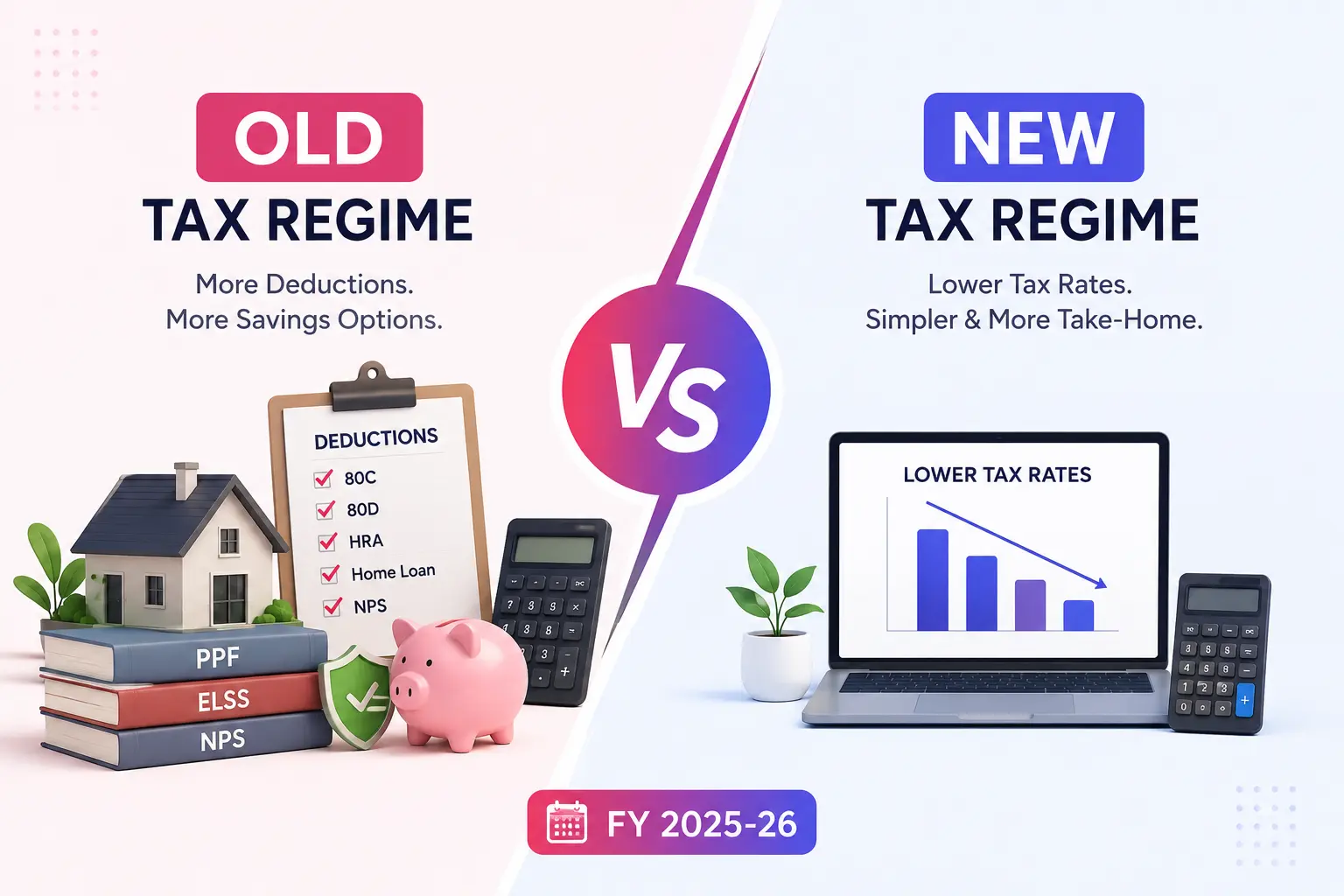
Choosing between the New Tax Regime and the Old Tax Regime has become one of the most important decisions for taxpayers in India. With changes announced in recent budgets and increasing flexibility in tax filing, many individuals are confused about which option will help them save more tax. In this guide, we compare both regimes, explain their advantages and disadvantages, and help you determine which one is best suited for your income and financial goals.
What is the New Tax Regime?
The New Tax Regime was introduced by the Government of India to simplify taxation and reduce dependency on tax-saving investments and deductions. Under this regime, taxpayers benefit from lower tax rates across various income slabs. However, most deductions and exemptions available under the Old Tax Regime cannot be claimed.
The objective is simple:
- Simplify income tax calculations
- Reduce paperwork
- Encourage flexible financial planning
- Provide lower tax rates without mandatory investments
Today, the New Tax Regime is the default tax regime for most individual taxpayers.
What is the Old Tax Regime?
The Old Tax Regime is the traditional taxation system that allows taxpayers to reduce their taxable income through various deductions and exemptions. Popular deductions include:
- Section 80C (PPF, ELSS, Life Insurance, EPF)
- Section 80D (Health Insurance)
- House Rent Allowance (HRA)
- Leave Travel Allowance (LTA)
- Home Loan Interest
- National Pension Scheme (NPS)
- Education Loan Interest
The Old Tax Regime is generally preferred by taxpayers who actively invest in tax-saving instruments and claim multiple deductions.
Key Difference Between New Tax Regime and Old Tax Regime
| Particulars | New Tax Regime | Old Tax Regime |
|---|---|---|
| Tax Rates | Lower | Higher |
| Deductions | Limited | Multiple |
| Exemptions | Mostly Not Available | Available |
| HRA Benefit | Not Available | Available |
| Section 80C | Not Available | Available |
| Section 80D | Not Available | Available |
| Home Loan Benefits | Limited | Available |
| Tax Calculation | Simple | Complex |
| Compliance | Low | Moderate |
| Best For | Individuals with fewer deductions | Individuals with substantial deductions |
TaxPlan Advisor
Not Sure Which Regime Saves You More?
Get a CA-assisted tax regime comparison and personalised tax planning for FY 2025-26 — no guesswork, just numbers.
New Tax Regime Tax Slabs FY 2025-26
The New Tax Regime offers progressive tax rates designed to reduce tax burden for middle-income taxpayers.
| Annual Income | Tax Rate |
|---|---|
| Up to ₹4,00,000 | Nil |
| ₹4,00,001 – ₹8,00,000 | 5% |
| ₹8,00,001 – ₹12,00,000 | 10% |
| ₹12,00,001 – ₹16,00,000 | 15% |
| ₹16,00,001 – ₹20,00,000 | 20% |
| ₹20,00,001 – ₹24,00,000 | 25% |
| Above ₹24,00,000 | 30% |
Additionally, eligible taxpayers may receive rebate benefits under Section 87A, significantly reducing tax liability.
Old Tax Regime Tax Slabs FY 2025-26
For individuals below 60 years:
| Annual Income | Tax Rate |
|---|---|
| Up to ₹2.5 Lakh | Nil |
| ₹2.5 Lakh – ₹5 Lakh | 5% |
| ₹5 Lakh – ₹10 Lakh | 20% |
| Above ₹10 Lakh | 30% |
While rates are higher, taxpayers can reduce taxable income through deductions and exemptions.
Major Deductions Available Under the Old Tax Regime
Section 80C — Up to ₹1.5 Lakh
Eligible investments include:
- Employee Provident Fund (EPF)
- Public Provident Fund (PPF)
- ELSS Mutual Funds
- Tax Saving Fixed Deposits
- Life Insurance Premiums
- Sukanya Samriddhi Yojana
Section 80D — Health Insurance
Deduction available for:
- Self
- Spouse
- Children
- Parents
Home Loan Benefits
Taxpayers can claim:
- Interest deduction under Section 24(b)
- Principal repayment under Section 80C
National Pension Scheme (NPS)
Additional deduction up to ₹50,000 under Section 80CCD(1B).
Which Tax Regime is Better for Salaried Employees?
The answer depends on the deductions available.
Choose the New Tax Regime if:
- You do not invest heavily in tax-saving products.
- You are a young professional.
- You want a higher monthly take-home salary.
- You prefer simple tax filing.
Choose the Old Tax Regime if:
- You claim HRA.
- You have a home loan.
- You invest under Section 80C.
- You pay health insurance premiums.
- You contribute to NPS.
TaxPlan Advisor
File Your ITR for FY 2025-26 with a Verified CA
Expert CA-assisted filing for salaried, business, NRI & entities — under whichever regime saves you more. Starting ₹999.
Common Mistakes Taxpayers Make
Choosing Without Calculation
Many taxpayers select a regime without comparing tax liability under both options.
Ignoring Future Financial Goals
Tax-saving investments often contribute to retirement and wealth creation.
Overlooking Employer Benefits
HRA and other allowances can significantly impact tax calculations.
Waiting Until the Last Minute
Tax planning should begin at the start of the financial year.
How to Choose the Right Tax Regime
Ask yourself these questions:
- ✓Do I have a home loan?
- ✓Do I claim HRA?
- ✓Do I invest under Section 80C?
- ✓Do I pay health insurance premiums?
- ✓Do I contribute to NPS?
- ✓Do I prefer higher liquidity over tax-saving investments?
Your answers will help determine the most tax-efficient option.
Frequently Asked Questions (FAQs)
Can I switch between New and Old Tax Regimes every year?
Salaried individuals generally have flexibility to choose during tax filing, subject to prevailing income tax rules.
Is the New Tax Regime compulsory?
No. Eligible taxpayers can choose between the New Tax Regime and the Old Tax Regime based on their financial situation.
Is HRA available in the New Tax Regime?
No, HRA exemption is generally not available under the New Tax Regime.
Can I claim Section 80C in the New Tax Regime?
Most Section 80C deductions are not available under the New Tax Regime.
Which tax regime gives maximum tax savings?
It depends on your deductions, exemptions, investments, and income level.
Final Verdict: New Tax Regime vs Old Tax Regime
There is no universal winner in the debate between the New Tax Regime and the Old Tax Regime.
The New Tax Regime is ideal for taxpayers seeking simplicity, lower tax rates, and greater financial flexibility. The Old Tax Regime remains beneficial for individuals who actively invest in tax-saving instruments, pay home loan EMIs, claim HRA, and maximize available deductions.
Before filing your Income Tax Return (ITR), compare your tax liability under both regimes and choose the option that aligns with your financial goals.
TaxPlan Advisor
Need Help Choosing the Best Tax Regime?
Consult a qualified tax professional to calculate your liability under both regimes and make the most tax-efficient decision for FY 2025-26.