Introduction
VAT Registration in the UAE is an important tax compliance requirement for businesses carrying out taxable economic activities in the United Arab Emirates. Whether a business operates from Dubai, Abu Dhabi, Sharjah, Ajman, Ras Al Khaimah, Fujairah or Umm Al Quwain, VAT registration is governed by the UAE's federal VAT framework and administered by the Federal Tax Authority (FTA).
The UAE applies a standard VAT rate of 5%. VAT is an indirect tax, meaning that it is generally collected by businesses from customers on taxable supplies and subsequently accounted for with the FTA.
For UAE-resident businesses, the key figures are AED 375,000 for mandatory registration, AED 187,500 for voluntary registration, and 5% as the standard VAT rate. The FTA confirms that mandatory registration is based on taxable supplies and imports exceeding AED 375,000 over the previous 12 months or expected to exceed that amount in the next 30 days. Voluntary registration can be available above AED 187,500, subject to the applicable conditions.
What Is VAT Registration in the UAE?
VAT Registration means officially registering a business with the UAE Federal Tax Authority (FTA) for Value Added Tax. Once approved, the business receives a Tax Registration Number (TRN) and becomes responsible for applicable VAT compliance requirements.
In simple words: VAT Registration = Registering your business with the FTA so that it can account for VAT on taxable transactions.
VAT is different from Corporate Tax. Corporate Tax primarily concerns taxable business income, whereas VAT relates to taxable supplies and transactions. A business can potentially have both Corporate Tax and VAT obligations.
UAE VAT Registration: Key Numbers
5%
Standard VAT Rate
AED 187,500
Voluntary Registration Threshold
AED 375,000
Mandatory Registration Threshold
UAE VAT Registration Threshold Explained
The UAE has two major VAT registration thresholds for UAE-resident businesses.
1. Mandatory VAT Registration – AED 375,000
A UAE-resident business generally must register for VAT when the total value of its taxable supplies and imports exceeds AED 375,000 over the previous 12 months, or when it anticipates exceeding AED 375,000 in the next 30 days. The FTA notes that this mandatory threshold is not applicable to foreign businesses in the same way.
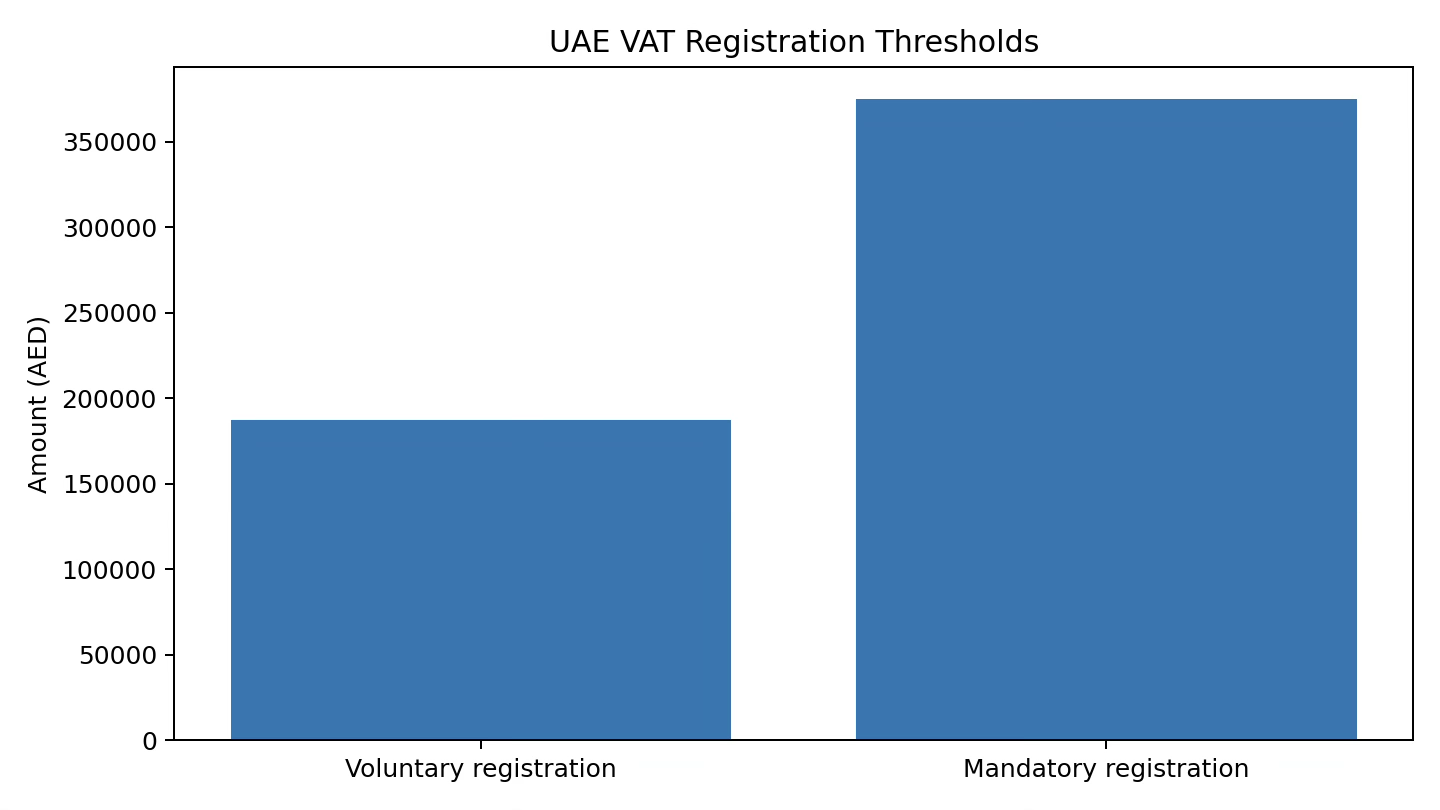
Figure 1: UAE VAT registration thresholds. Source: Federal Tax Authority.
2. Voluntary VAT Registration – AED 187,500
A UAE-resident business that does not meet the mandatory registration requirement may be eligible for voluntary VAT registration when the relevant taxable supplies, imports or taxable expenses exceed AED 187,500 over the previous 12 months or are expected to exceed that amount in the next 30 days, subject to the applicable conditions.
Example
Suppose a UAE business has taxable supplies of AED 150,000 and qualifying taxable expenses of AED 50,000. The relevant amount is AED 200,000. Because AED 200,000 is above the AED 187,500 voluntary threshold, the business may be eligible for voluntary registration if the applicable conditions are satisfied.
What Is the UAE VAT Rate?
The standard VAT rate in the UAE is 5%. Certain supplies can have different VAT treatments, including zero-rated or exempt supplies, so businesses should not assume that every transaction is automatically subject to 5% VAT.
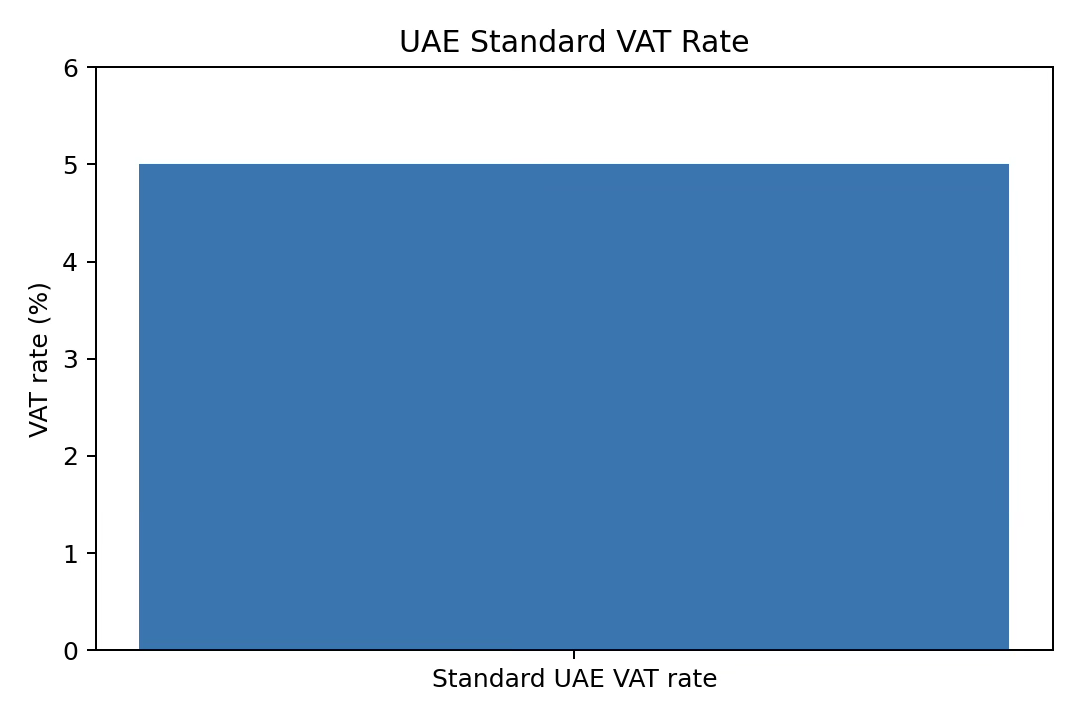
Figure 2: Standard UAE VAT rate.
5% VAT Calculation: Example
Suppose a UAE business provides a taxable service worth AED 10,000.
| Taxable service value | AED 10,000 |
| VAT @ 5% (AED 10,000 × 5%) | AED 500 |
| Total invoice value | AED 10,500 |
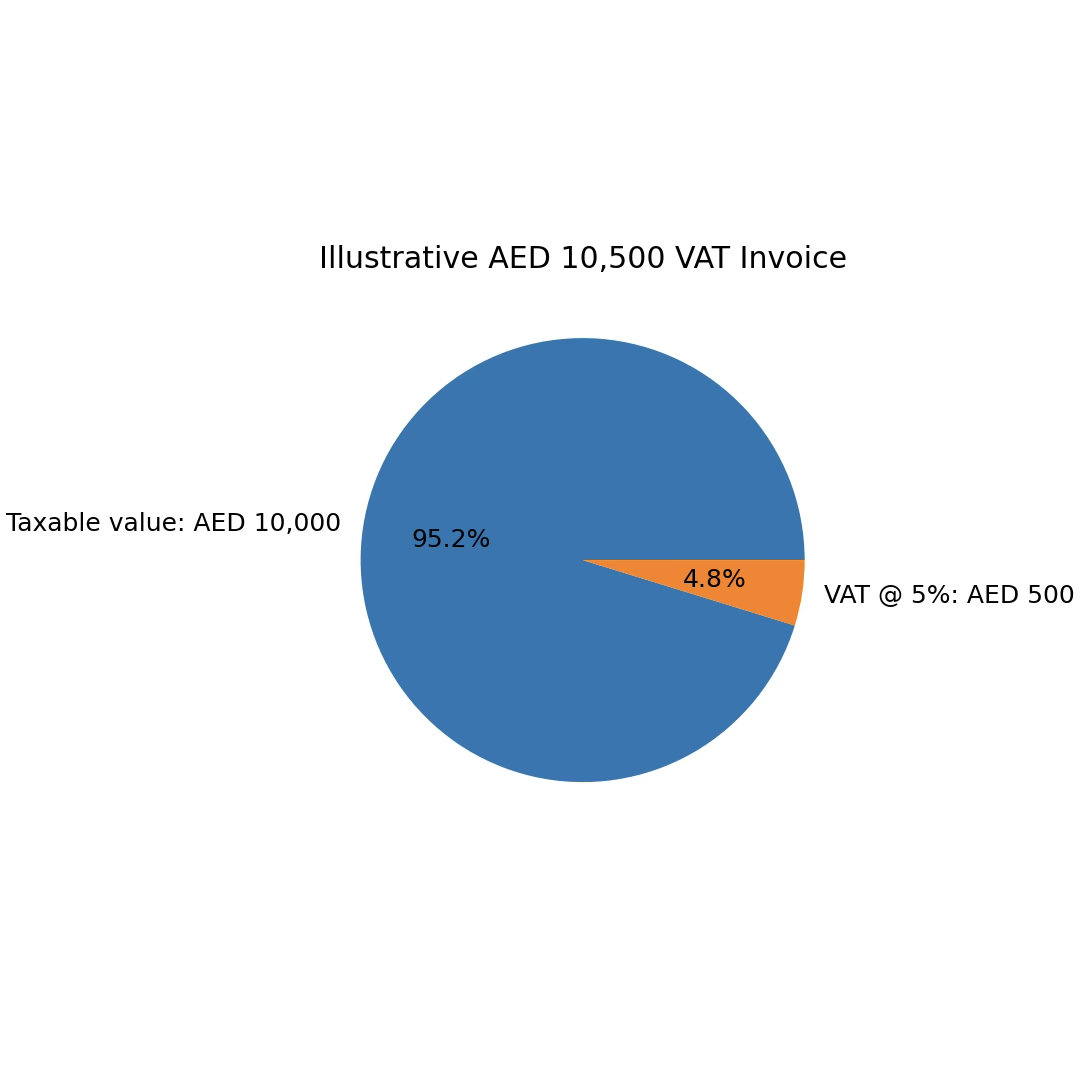
Figure 3: Illustrative AED 10,500 VAT invoice composition. This is an example only; actual VAT treatment depends on the transaction.
How Does a Business Know When It Is Approaching AED 375,000?
Businesses should monitor taxable turnover regularly rather than checking revenue only once a year.
| Month | Illustrative Taxable Sales | Cumulative Sales |
|---|---|---|
| January | AED 20,000 | AED 20,000 |
| February | AED 22,000 | AED 42,000 |
| March | AED 25,000 | AED 67,000 |
| April | AED 28,000 | AED 95,000 |
| May | AED 30,000 | AED 125,000 |
| June | AED 32,000 | AED 157,000 |
| July | AED 35,000 | AED 192,000 |
| August | AED 38,000 | AED 230,000 |
| September | AED 40,000 | AED 270,000 |
| October | AED 42,000 | AED 312,000 |
| November | AED 45,000 | AED 357,000 |
| December | AED 48,000 | AED 405,000 |
Table: Illustrative month-by-month UAE taxable sales showing cumulative turnover crossing AED 375,000 by November.
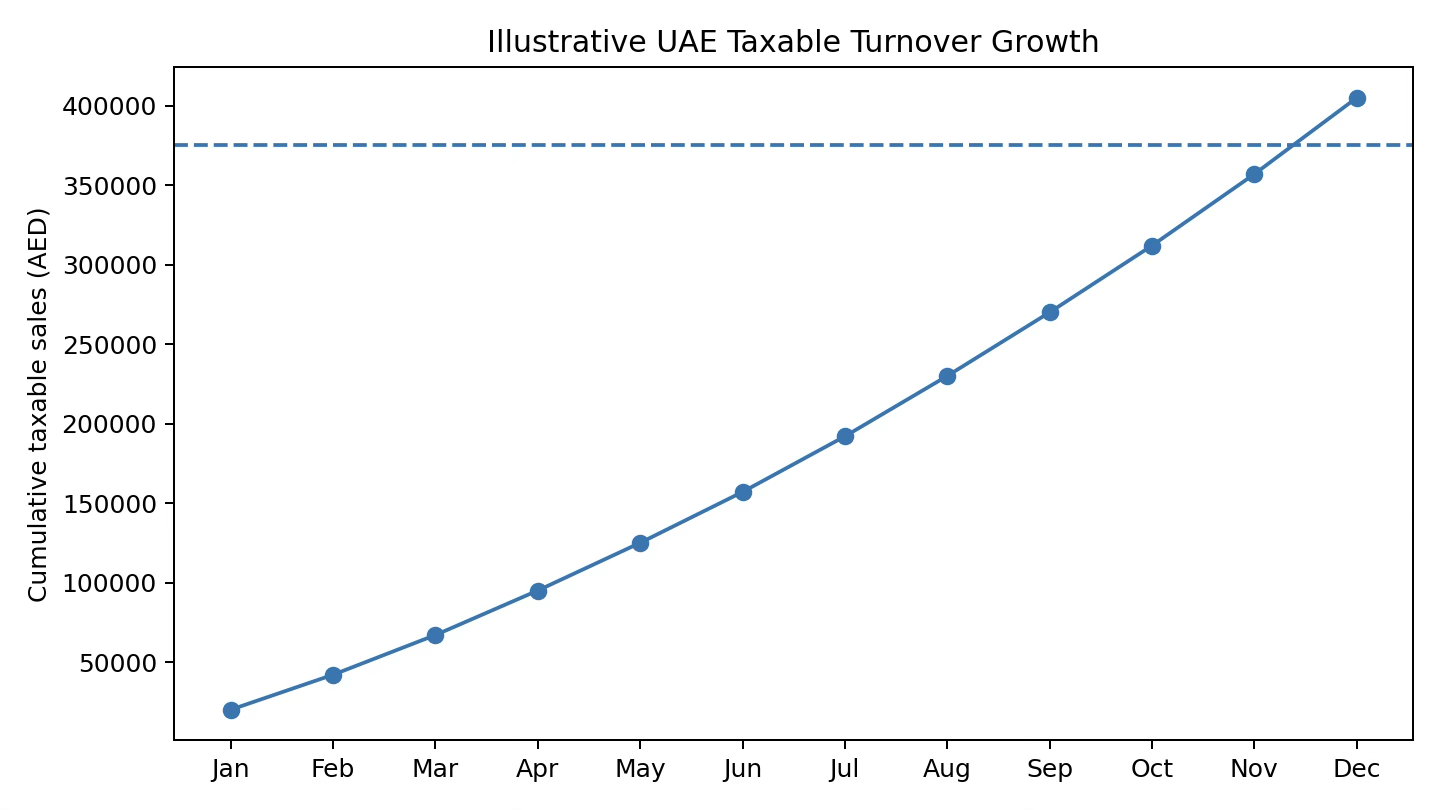
Figure 4: Illustrative UAE taxable turnover growth. These figures are illustrative and are not FTA-reported market data.
In this illustration, cumulative taxable sales reach AED 405,000 by December. In practice, the FTA registration test uses the relevant previous 12-month and expected-next-30-day rules rather than simply an annual financial-year total.
VAT Registration for Mainland and Free Zone Businesses
VAT registration is not restricted to businesses operating in a particular emirate. Businesses operating in Dubai, Abu Dhabi, Sharjah, Ajman, Fujairah, Ras Al Khaimah and Umm Al Quwain may need to consider the same federal VAT registration framework.
Free Zone businesses are not automatically VAT-exempt
Businesses in UAE Free Zones should also not automatically assume that Free Zone status means VAT does not apply. VAT treatment depends on the nature of the business, transactions, supplies and applicable UAE VAT rules.
VAT Registration for Non-Resident Businesses
This is particularly important for international companies, overseas businesses and NRIs doing business with customers or businesses in the UAE.
The FTA states that a non-UAE-resident business making taxable supplies in the UAE may be required to register for VAT regardless of the AED 375,000 threshold where there is no other person in the UAE responsible for accounting for the VAT on those supplies.
Therefore, an overseas business should not simply assume: “My UAE sales are below AED 375,000, so VAT registration is not required.” The residency of the business and the nature of the UAE supply need to be considered.
How to Register for VAT in the UAE
- 1
Create an EmaraTax Account
Sign up through the FTA’s EmaraTax platform and activate the account.
- 2
Create a Taxable Person Profile
Create the relevant taxable person profile.
- 3
Access the Taxable Person Account
Open the relevant account dashboard.
- 4
Select VAT Registration
Select Register → Value Added Tax.
- 5
Complete the Application
Enter the required business, financial and registration information and upload applicable documents.
- 6
Submit the Application
Review the information and submit the VAT registration application.
The FTA currently lists the VAT registration service through EmaraTax. The service is free, the estimated time to submit the application is 45 minutes, and the FTA estimates 20 business days to complete the application from receipt of a completed application.
Documents Required for UAE VAT Registration
- Certificate of Incorporation, Memorandum of Association or Partnership Agreement, where applicable
- Commercial registration certificate or official document issued by the licensing authority
- Valid trade licence and branch licences, if any
- Customs information, where applicable
- Additional supporting documents depending on the legal form of the business
What Happens After VAT Registration?
Once registered, a business is expected to:
After successful registration, the VAT registration certificate becomes available through the taxpayer's e-Services dashboard.
Output VAT vs Input VAT
Output VAT is the VAT charged by the business to customers.
Example: Sales of AED 100,000 × 5% = AED 5,000 output VAT.
Input VAT is VAT incurred on eligible business purchases and expenses.
Example: eligible business purchases of AED 40,000 with VAT of AED 2,000.
Net VAT Payable
Illustratively: Output VAT − Eligible Input VAT = Net VAT payable. AED 5,000 − AED 2,000 = AED 3,000. Actual input VAT recovery depends on the applicable UAE VAT rules and the nature of the expense.
VAT Return Filing in the UAE
VAT registration is not a one-time activity. Once registered, a business generally has continuing VAT return and payment obligations according to its assigned tax period.
Businesses should maintain accurate records so that VAT can be calculated correctly and the position can be supported if the FTA requests information, including:
- Sales and purchase records
- VAT invoices
- Credit and debit notes
- Import/export documentation where relevant
- Input VAT records
- Output VAT records
- Supporting accounting documents
Taxplan Advisor
Registering a UAE Business for VAT?
Get your taxable turnover assessed, EmaraTax registration handled, and ongoing VAT return filing managed by an experienced advisory team.
Common UAE VAT Registration Mistakes
Waiting until year-end
Businesses should monitor the applicable rolling 12-month and expected-next-30-day tests.
Assuming AED 375,000 applies to everyone
Non-resident businesses can have different registration obligations.
Assuming Free Zone means VAT-free
Free Zone status does not automatically eliminate VAT obligations.
Treating VAT as business income
VAT collected from customers generally represents tax collected under the VAT system.
Incorrectly claiming Input VAT
Input VAT recovery must satisfy applicable UAE VAT requirements.
Missing compliance deadlines
Registration should be followed by proper invoicing, record keeping, return filing and payment processes.
UAE VAT Registration: Quick Summary
| Item | Figure / Requirement |
|---|---|
| Standard VAT Rate | 5% |
| Mandatory Registration Threshold | AED 375,000 (previous 12 months or expected next 30 days) |
| Voluntary Registration Threshold | AED 187,500, subject to applicable conditions |
| Registration Platform | EmaraTax (Federal Tax Authority) |
| Estimated Application Time | ~45 minutes to submit; ~20 business days for FTA processing |
| Non-Resident Businesses | May need to register regardless of the AED 375,000 threshold |
Final Takeaway
VAT Registration in the UAE is an important part of doing business in the country. The two most important registration figures for UAE-resident businesses are AED 375,000 for mandatory registration and AED 187,500 for voluntary registration, subject to the applicable conditions. The standard VAT rate is 5%.
However, VAT compliance is much more than obtaining a TRN. Businesses need to understand which transactions are taxable, monitor their registration threshold, issue appropriate tax invoices, maintain records, calculate input and output VAT correctly, and meet their VAT return and payment obligations.
For UAE mainland businesses, Free Zone businesses, startups, freelancers, e-commerce businesses, consultants, service providers, international companies and NRIs, understanding VAT registration requirements early can help reduce compliance risks.
5%
Standard VAT Rate
AED 187,500
Voluntary Registration Threshold
AED 375,000
Mandatory Registration Threshold
Frequently Asked Questions
What is the VAT registration threshold in the UAE?
A UAE-resident business must register for VAT when taxable supplies and imports exceed AED 375,000 over the previous 12 months, or are expected to exceed that amount in the next 30 days. Voluntary registration is available above AED 187,500, subject to applicable conditions.
What is the standard VAT rate in the UAE?
The standard VAT rate in the UAE is 5%. Certain supplies may be zero-rated or exempt, so businesses should confirm the correct treatment for each transaction rather than assuming every supply is taxed at 5%.
Do Free Zone businesses need to register for VAT?
Free Zone status does not automatically mean VAT does not apply. VAT treatment depends on the nature of the business, its transactions and supplies, and whether it operates from a Designated Zone, so Free Zone businesses should assess their position rather than assume exemption.
Do non-resident businesses need to register for VAT in the UAE?
A non-UAE-resident business making taxable supplies in the UAE may be required to register regardless of the AED 375,000 threshold, where there is no other person in the UAE responsible for accounting for the VAT on those supplies.
How long does UAE VAT registration take?
The FTA currently estimates around 45 minutes to submit a VAT registration application through EmaraTax, with approximately 20 business days for the FTA to process a completed application.
Disclaimer
This article is for general educational and informational purposes. VAT treatment can vary depending on the business structure, nature of supplies, residency, imports, exports, Free Zone status and other circumstances. Professional tax advice should be obtained before making business or tax decisions.
Official Reference Sources: Federal Tax Authority (FTA) · UAE Ministry of Finance